
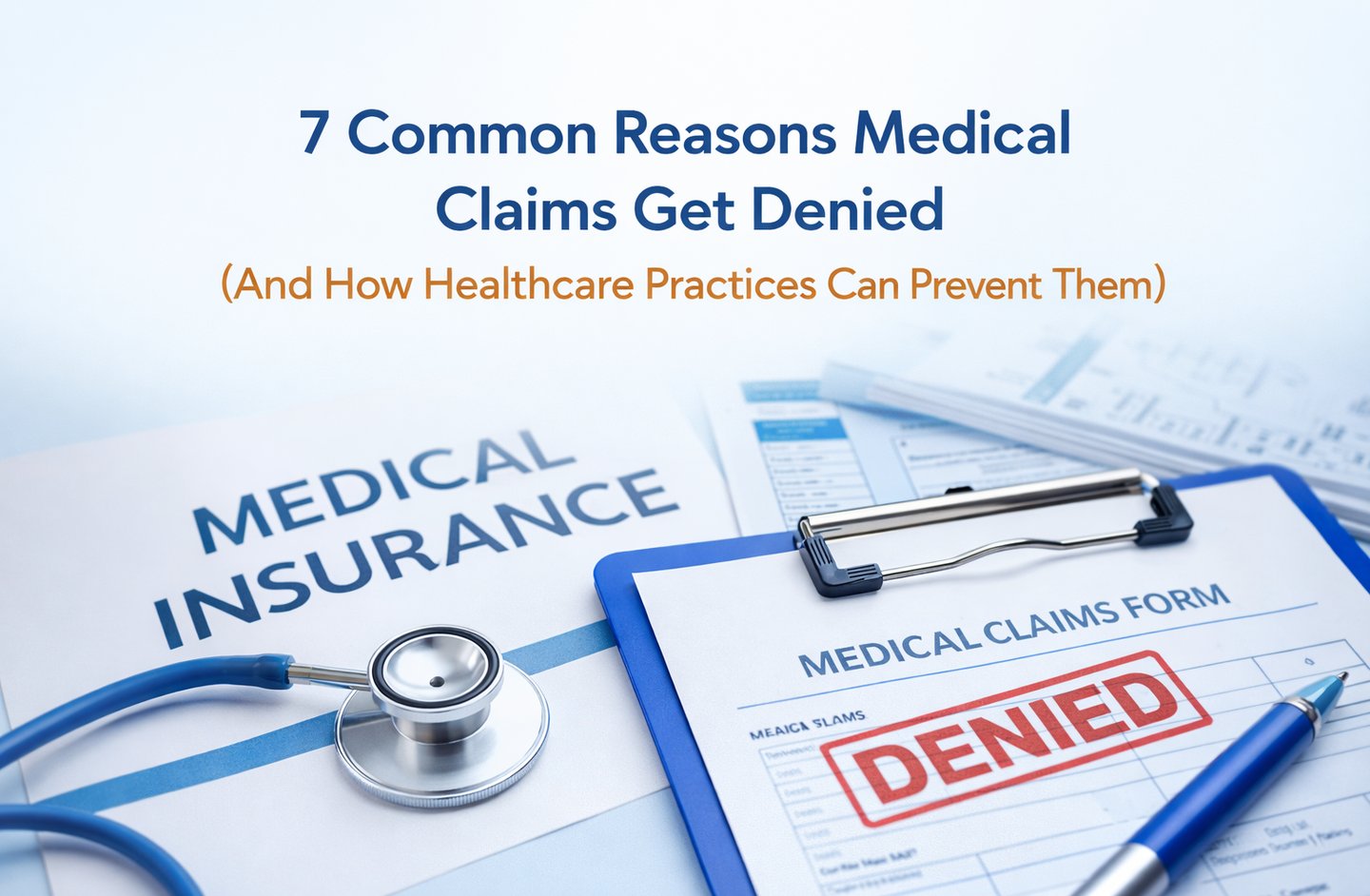
7 Common Reasons Medical Claims Get Denied (And How Healthcare Practices Can Prevent Them)
Medical claim denials are a major challenge for healthcare practices. In this article we explain the most common reasons claims get denied and how clinics can prevent revenue loss.
BLOG
Ashfaq Ahmad
3/11/20263 min read
Introduction
Medical claim denials are one of the most common financial challenges healthcare practices face today. Even well-managed clinics and hospitals can lose significant revenue due to preventable billing and documentation issues.
Industry estimates suggest that around 5–10% of medical claims are denied by insurance payers, and many of these denials are preventable with proper billing workflows and verification processes. Strong revenue cycle management processes help healthcare organizations reduce claim denials and improve cash flow.
Understanding why claims get denied is the first step toward improving revenue cycle performance and maintaining consistent cash flow. In this article, we explore the seven most common reasons medical claims are denied, and practical steps healthcare providers can take to prevent them.
1. Incorrect Patient Information
One of the most frequent causes of claim denials is incorrect patient demographic information. Even small mistakes in patient details can result in rejected claims.
Common errors include:
misspelled patient names
incorrect date of birth
wrong insurance ID numbers
outdated insurance details
How to prevent it
Healthcare practices should ensure that patient information is verified during registration and updated regularly. Front desk staff should double-check patient demographics and insurance details before submitting claims.
2. Insurance Eligibility Not Verified
Failure to verify insurance eligibility before a patient visit can lead to immediate claim denials.
If a patient's insurance coverage has expired or the service provided is not covered under their policy, the insurance company may reject the claim.
How to prevent it
Healthcare providers should verify:
insurance status
coverage details
deductibles and co-pays
service eligibility
Proper eligibility verification before appointments can prevent many billing issues later in the revenue cycle.
3. Medical Coding Errors
Incorrect or outdated medical codes are another major reason claims get denied.
Coding errors can occur when:
CPT or ICD-10 codes are incorrect
procedures are coded improperly
documentation does not support the code used
How to prevent it
Practices should ensure that:
certified coders review claims
coding updates are followed regularly
documentation supports the coded services
Accurate coding improves claim acceptance and speeds up reimbursements.
4. Missing or Incomplete Documentation
Insurance companies require complete and accurate clinical documentation to process claims.
If documentation is missing or unclear, the payer may deny the claim due to insufficient medical necessity or incomplete records.
How to prevent it
Healthcare providers should ensure:
detailed patient notes are recorded
treatment justification is documented
supporting documents are attached when required
Strong documentation protects both compliance and revenue.
5. Lack of Prior Authorization
Certain procedures require prior authorization from insurance providers before the service is performed.
If authorization is not obtained beforehand, the insurance company may deny the claim entirely.
How to prevent it
Practices should:
verify authorization requirements
obtain approval before services are provided
document authorization numbers in the claim
A clear authorization workflow can significantly reduce these denials.
6. Duplicate Claims Submission
Duplicate claims are sometimes submitted when billing teams resend claims without verifying the original claim status.
Insurance companies may reject these duplicate submissions automatically.
How to prevent it
Billing teams should track claim status carefully and confirm payer responses before resubmitting claims.
Using proper billing software and organized workflows can help prevent duplicate submissions.
7. Timely Filing Issues:
Insurance companies enforce strict deadlines for claim submission, known as timely filing limits.
If claims are submitted after the deadline, they may be denied regardless of the service provided.
How to prevent it:
Healthcare practices should:
submit claims promptly
track submission timelines
follow up on pending claims regularly
Efficient billing processes help avoid missed filing deadlines.
Conclusion:
Medical claim denials can significantly impact healthcare revenue and operational efficiency. However, many denials originate from preventable issues such as incorrect patient information, coding errors, missing documentation, or incomplete eligibility verification.
By strengthening front-end processes, improving documentation accuracy, and implementing structured revenue cycle management systems, healthcare practices can reduce denial rates and improve financial performance.
Need Help Reducing Claim Denials?
If your healthcare practice is experiencing frequent claim denials or revenue cycle inefficiencies, professional medical billing services can help improve collections and reduce administrative workload.
Learn more about our medical billing services:
https://www.capitolmedicaltech.com/medical-billing
Related Articles (Coming Soon)
Benefits of Outsourcing Medical Billing for Healthcare Practices
How Insurance Verification Reduces Claim Denials
How Revenue Cycle Management Improves Healthcare Cash Flow
Contact
Supporting Healthcare Practices with Reliable Revenue Cycle & Clinical Documentation Services
(571) 410-3703
© 2026. All rights reserved.
Capitol Medical Technologies, LLC
45 Rockefeller Plaza
20th Fl # 391
New York, NY 10111
United States